Showing posts with label Lindan Toole. Show all posts

Monday, February 1, 2010

Nerja and Frigliana

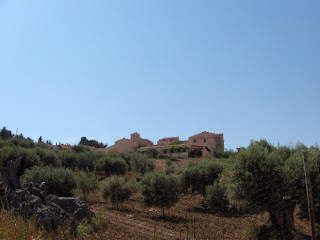
A visit to my friend Sherri who lives between Nerja and Frigliana in Spain seemed like the perfect time to hang out and catch up with what she’s up to and maybe learn a little more about Spanish cuisine. I’m not all that familiar with Spanish food and she promised to show me some of her favourite dishes.

Before we head the supermercado to shop, we go to the beach for a paella lunch with friends. Given the year round fabulous weather in Nerja, it’s no surprise that everything is outside – the kitchen as well as the tables. The paella pans are a metre wide and there are three or four of them cooking away. The restaurant probably holds 200 people and we have to wait for seats. Nerja is filled with British ex-pats who obviously love the paella. I’m not so convinced.

I’m much happier in the supermercado where I can wander from aisle to aisle discovering all kinds of new foods. In the fish section I find vacuum sealed packages of smoked and dried tuna along with boquerones, anchovies, sardines, dried cod, calamari and frozen octopus. The cheese section holds an equally awesome selection as do areas filled with olive oils and wines!!

We make our way home, laden with bags of ingredients and make incredible (and incredibly easy) tapas with the dried tuna, the octopus, the calamari and the sardines. We make an equally easy Torta de San Juan – a cake with lots of olive oil and almonds. It’s all accompanied by a passable bottle of wine that I’ve selected. Turns out I know even less about Spanish wine then I do about the food. You know it’s bad when your non-drinking friends are telling you how to choose wine!

Anyway, we enjoyed the tapas and the torta all of which I’ve since made at home. But that was about all I learned about Spanish food because the rest of our time was spent cooking from Sherri’s newly acquired Bonnie Stern’s Friday Night Dinners. I guess you can take the woman out of Canada but you can’t take Canada out of the woman – or something like that.

Tuesday, January 19, 2010

There's always time for tapas

My interests when travelling are pretty broad – I can wander through archaeological sites and ancient cities, hike through rainforests and canoe down jungle rivers. I can lose myself in museums and orchid gardens.

But wherever you find me and whatever I’m doing, food is never far from my mind – trying local restaurants and street food stalls, exploring the local markets and grocery stores, taking cooking classes to learn about traditional foods, visting local food festivals – no matter how big or small. If there’s a food angle you’ll find me there.

So last year when I finally made plans to spend a couple of days in Sevilla I planned to go tapas hopping. My friends warn that it’s Semana Santa (Easter Holy Week) and I won’t find a hotel. Armed with a list of recommendations I begin the long process of finding of a room. My first call to my first choice yields a room. I guess Las Casas de la Juderia (The Houses of the Jews) isn’t a big seller during Semana Santa.

We arrive in late afternoon, walk around the neighbourhood planning how to see everything we want to see in the next two days. We decide to hit one tapas bar and make it an early night. We start with sangria and then order small plates of boquerones, calamares, anchovies, tortilla, chorizo, olives and almonds.

I know about the religious processions held during Semana Santa and certainly intend to see one while in Sevilla. Turns out every church has its own procession and there’s a schedule published. As we walk towards the church, the streets are lined with people and every balcony is filled with people. As the procession rounds the corner we’re amazed to see thousands of participants in outfits similar to, but not to be mistaken for those worn by Ku Klux Klan members. (We’d been told about them, but it’s hard to imagine until you’re there).


Each procession has two ‘floats’ (one with Jesus and the Cross, the other the Madonna) that are carried throughout the neighbourhood by 20 or more people. It’s a huge honour to carry the float but also a huge responsibility. In one place they had to all crouch down to be able to get under an overhead pass. And, although there are police everywhere keeping the crowds back, people are always breaking through and closing in on the floats.


It was just an amazing experience and everyone should try to visit during Semana Santa. And, don’t worry, I know where you can get a room.

Friday, January 8, 2010

Lost in Sicily

Only three days into a real Canadian winter and already I’m thinking about places I’d rather be. I’m lucky that I can legitimize my daydreaming by calling it planning.

When I open my computer in the morning a desktop photograph of a flock of sheep surrounding my car reminds me of the Sicilian countryside - and joy of joys, although they're causing a few minutes delay, I'm not lost! Lost is a recurring theme as soon as I get off the highway in Sicily and truth be told an hour later I was lost again.

The picture was taken on my way to spend the day with Sicilian cooking maven Anna Tasca Lanza at Casa Vecchie her country home (and cooking school) just outside of the town of Vallelunga. Casa Vecchie sits adjacent to Regaleali, the Tasca family's vineyards and winery and a day there means fabulous food and fabulous wine.

Of course I arrive late - having been lost yet again, but she graciously overlooks this and we sit down over coffee to talk about the day ahead. We'll spend the day cooking - well, Anna will cook and I'll mostly watch - focaccia, pasta with cauliflower, an orange salad, a tuna roast that she baked (the biggest piece of tuna I've ever seen outside the fishmongers) and sfince infornate (cream puffs) and a fruit salad for dessert. Each course was accompanied by Regaleali wines and the dinner was long and leisurely.

Anna's a fountain of knowledge about Sicilian food, history and culture and we spend much of the day talking about local food festivals, the foods specific to Saints Day - eaten only on that saint's day and how traditions and food change from town to town in the celebration of the most important saints. The saint most often honoured is San Guiseppe (Saint Joseph) and each March families set up little alters in their homes and busy themselves making many different dishes as an offering to San Guiseppe.

I've always loved exploring and visiting these little towns during their festivals and saints days and March in Vallelunga sounds like a good time to be escaping the winter - if I can hold out that long.

Photos by Lindan Toole. From top to bottom: Road hazards in Sicily; the beautiful surroundings of Casa Vecchie; an impressive Tuna roast; delicious orange salad.

Here, a few of Anna Tasca Lanza's recipes

Rosemary Focaccia
- 3-1/3 cups semolina flour
- 1 Tbsp sea salt
- 1 cake of compressed yeast (24 grams)
- about 2 cups of warm water
- 3/4 cup olive oil (she used 1 cup in class)
- 3/4 cup white wine (she used 1 cup in class)

Rosemary Topping
- Coarse salt
- 1 sprig of rosemary (this would be one whole bunch of the rosemary we get)
- olive oil
  • Mix flour & salt & make a well. Crumble yeast in well & dissolve with 1 cup of warm water.
  • Little by little, add olive oil & wine, s working in the flour. Mix in as much of the rest of the water as is needed and make a smooth dough that’s easy to handle.
  • Work the dough for about 5 minutes.
  • Drizzle olive oil into a bowl, put in the ball of dough and oil on all sides.
  • Cover with plastic wrap and refrigerate overnight.
  • Two hours before baking, sprinkle a 16x12” baking sheet with olive oil, stretch the dough on it – covering completely.
  • Put the baking sheet in a warm place under a blanket until doubled – about 2 hours.
  • Press your fingertips all over the dough, sprinkle with coarse salt and rosemary needles and drizzle with olive oil.
  • Bake in a 400F oven for 30-35 minutes.
  • Remove from oven and sprinkle with olive oil again.
  • Cut into pieces and serve hot.
  • Cooled and stored in a plastic bag, it will stay good for a few days. Heat it up when ready to serve.
Baked Tuna
(Flavors of Sicily - Anna Tasca Lanza)
serves 6-8 people
Serve this baked tuna with mashed potatoes. If there is any left, use it for Riso con Tonno Fresco or as a topping for pasta.

- 3 cloves garlic
- 1/2 cup (30 g) mint leaves
- 2 salted anchovies, filleted and rinsed, or 4 canned anchovy fillets
- 3 lbs (1.5 kg) fresh tuna, or 1 or 2 pieces, 2” (5cm) thick
- salt and freshly ground pepper
- 1/4 cup olive oil
- 1-1/2 cups (375ml) white wine
- juice of 1 lemon
- 1 sprig of rosemary

  • Preheat oven to 375F (190C)
  • Chop the garlic, mint and anchovies and mix them together. With the top of a knife, make holes in the tuna, about 1-1/4” (3cm) deep and about 2-1/2” (6 cm) apart. Fill the holes with the garlic mixture. Rub the fish with salt and pepper and the rest of the mixture, if any remains.
  • Put the fish in a roasting pan or baking dish and drizzle with the olive oil. Bake for 10 minutes.
  • Remove from the oven, pour 1 cup of the wine and the lemon juice into the pan, and scrape the bottom with a wooden spoon. Put the rosemary in the pan. Put the fish back into the oven. Reduce the heat to 350F (180C) and cook until done, turning once, 20 to 30 minutes, depending on how thick the fish is. Test by inserting the top of a knife, it should to in easily. Remove from the oven. Set the fish aside on a serving dish and keep it warm while you make the sauce.

Tuesday, December 29, 2009

Tamales

I used to spend Christmas holidays in Costa Rica and I have great memories of being invited to friends’ homes to share tamales on Christmas eve. Tamales are rarely eaten throughout the rest of the year, but are a Christmas eve tradition and every year my friend Jose Maria’s mother (and sister and aunts and friends) would get together and make around 250 of them and then trade with other friends and relatives who had made them with different kinds of fillings. It’s sort of like a cookie exchange - but with tamales.

I got to help on a couple of occasions and it was really a fun and festive time – all the more fun and festive because I didn’t have to make the corn dough that JM’s mother prepared from scratch. By the time I arrived it was a matter of assembling the tamales – chopping and mincing ingredients for the filling, cutting the plantain leaves and string to wrap the tamales, then wrapping them and boiling them. With a little music, a little wine, lots of talking.

One year when we didn’t get to CR, I made them for friends here and this year I decided to try them again. They aren’t exactly Costa Rican tamales because by the time I got around to buying my ingredients there weren’t any plantain leaves left and I bought corn husks instead. Corn husks are used for Mexican tamales and are steamed rather than boiled.

I used Maseca instant corn masa flour, which is very easy to make following directions on the package and I made two fillings - chicken and picadillo (ground beef). I lined each corn husk with the corn flour dough, then added a spoon of filling and wrapped and tied each tamale, then filled my steamers - a double boiler, a Oster steamer and a Chinese bamboo steamer.

I didn’t make 250 of them – because I don’t have anyone to trade with and I didn’t have friends over to share the tasks, but I will follow the tradition of having friends over on Christmas eve to share them.

Picadillo
1 Tbsp veg oil
1 large onion, finely chopped
2 garlic cloves, crushed
1-1/2 lbs minced beef
2 Tbsp tomato puree
1 green chili, seeded and finely chopped
14 oz can chopped tomatoes
½ tsp ground cumin
1 tbsp chopped oregano
2 tbsp chopped parsley
salt and freshly ground pepper to taste
1 large potato, peeled and cut into small cubes

1) heat the oi8l in large pan and add the onions and garlic. Cook until the onions are soft, about 10 minutes.
2) Add minced beef in batches and cook, stirring constantly with a fork to break up any lumps.
3) Stir in tomato puree, chili, chopped tomatoes, cumin, oregano and half the parsley. Season to taste, bring to a boil, reduce heat and cook, covered for 20 minutes.
4) Add potato and cook, uncovered for another 20 minutes or until the potato is tender. Mix in remaining parsley and season to taste with salt and pepper.
5) Serve hot or use to fill empanadas, tamales, pies, etc.

Friday, December 18, 2009

Hanukkah, the Festival of Lights

Hanukkah commemorates the victory of the Maccabbees in their 164BCE battle against the Syrian Hellenists and recapturing Jerusalem. When they returned to Jerusalem they found the Temple burned and a single oil lamp containing enough oil for one day. They lit it and miraculously it burned for eight days.

Today the miracle of the oil is symbolized by the lighting of candles in a Hanukkah menorah (menorah is Hebrew for lamp). There are nine places in the menorah – one for each night, plus the shamash (the candle used to light the others) One candle is lit on the first night, two the second and so on for eight days.

In the kitchen, the miracle of the oil is symbolized with foods cooked in oils. Potato latkes (pancakes) are probably the most well know of these foods, but latkes are really a tradition of the Ashkenazi Jews of Eastern Europe. Jews in other parts of the world have other traditional foods - Italian Jews eat chicken pieces dipped in batter and deep fried, in Alsace they eat goose, and Iraqi Jews eat kba dumplings – a potato dough stuffed with chicken, meat and raisins and cooked in oil. In Morocco it’s sfenj – a deep fried donuty thing (a fabulous donuty thing by the way) that’s a breakfast and snack food throughout the year. A similar thing is called loukoumades in Greece and lokma in Turkey. In Israel – and now pretty much everywhere - sufganiot (jam filled donuts) are eaten at Hanukkah.

Even though I don’t make a lot of Ashkenazi foods, I always latkes on the first night of Hanukkah and, because sour cream is my topping of choice, I serve them with smoked fish and a large salad. I can’t usually bring myself to eat those 600+ calorie sufganiot but if I do break down, I’ll buy them at Harbord Bakery in Toronto rather than make them.

This year the last night of Hanukkah will be on Friday (the beginning of Shabbat) and at my house that often means chicken. This year I’ll follow the Italian tradition of fried chicken cutlets. And for dessert – I don’t know, maybe I’ll run over to Harbord Bakery for one sufganiah and cut it into 6 parts!

Friday, October 30, 2009

A taste of Morocco, in your kitchen perhaps?

We know you were all salivating reading Lindan's post about her time spent in Morocco. Lucky for us, she is a kind and generous soul, and she has shared some of the recipes that she prepared while enjoying cooking classes there. If you care to try your hand at preparing them, just click here to download a complete list of recipes for a typical Moroccan feast! There is one catch though - we may not be dining with you, but we certainly appreciate visuals. So please, post some photos of your creations to our Facebook page. Enjoy!

Wednesday, October 28, 2009

This week's classroom: a Moroccan kitchen

I’ve been in Fes for the past 10 days running from morning til night and finally sitting down to write something. I was traveling with such a fabulous group last week – 7 friends from Wisconsin travelling together who loved to cook and eat, and also loved our riad (little hotel) and everything about Fes. Of course I think it’s impossible not to love Fes.
Shopping with Lahcen Beqqi

Our first cooking classes were with Lahcen Beqqi. The first morning we went to the souk to shop for ingredients and then straight to the kitchen to make harira, zaalouk, chicken b’steeya dates rolls. For our second class we made choukchouka, and okra salad, a great couscous with vegetables (and lamb) and a cream b’steeya for dessert.

Camel butcher shop – they display what they sell

We spent our last two days cooking with Danielle Mamane, co-author with Kitty Morse of cookbook – The Scent of Orange Blossoms - Sephardic Cuisine from Morocco. After spending two fabulous days cooking with her, she invited us for Shabbat dinner and my group (none of whom is Jewish) loved it.

Lamb Tagine

We cooked in her garden – salads, including fried eggplant, twice cooked roasted red peppers, and tomato salad with preserved lemons and then cooked meatballs (cinnamon onion sauce and another meatball dish seasoned with the traditional Moroccan spice mixture) ras el hanoot (head of the shop). For dessert we made almond and walnut macaroons and dates stuffed with almond paste. Danielle also made a number of other dishes – in case any of us were hungry. Nobody is ever hungry on cooking trips!

Cooking with Danielle Mamane

Fes is the most highly populated medina in the world (about 300,000 residents) and Fes el Bali (old Fes - the 9th century) and Fes el-Jedid (new Fes -12th century) are fascinating to explore.

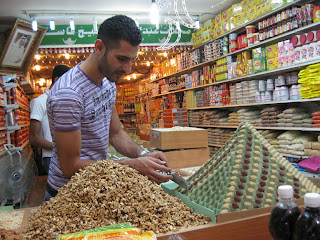
Buying spices to take home

The entire medina is a labyrinth of narrow streets that can only be explored on foot. Donkeys and mules are the only means of transportation – and lots of handcarts delivering goods from place to place.

In a few days, I’ll show you some of the sights of the medina.

Wednesday, October 14, 2009

A cooking lesson in Sicily

Well, here I am, eating my way through another of my favourite places. I’ve been in Agrigento, Sicily for two days now, long enough to have forgotten airports, a plane full of crying babies, layovers that went on for way to long – and waiting four hour suntil everyone arrives and we can start our 2-1/2 hour drive to Agrigento. Anyway, all that is behind me.

The drive isn't so bad when the scenery is this beautiful

I’m at Fattoria Mose in Villagio Mose (just outside of Agrigento) and all is well in my world. Dinner is just over when we arrive but Chiara Agnello has kept the chicken with red wine and rosemary and risotto with mushrooms and eggplants warm for us. It would be wonderful even if we weren’t hungry – and we won’t be for the rest of our stay.

Pasta vongole - just another of the fabulous meals I enjoyed!

I’ve been coming to here for 5 or 6 years now and every visit is like coming home. The farm has been in Chiara’s family since the 18th century and she and her partner Ernesto are warm and welcoming hosts. The farm, organic since 1986, produces olives (and olive oils) almonds, pistachios, oranges and lots of other fruits and vegetables.

All smiles in the kitchen

During the week, Chiara (and Ernesto) will teach us to cooking Sicilian dishes – the fish is Ernesto’s department and Monday morning we drive 30 km to Porto Empedocle to the fish store. Sicilian food is simply prepared using only the freshest, in season ingredients. At the Casa del Pesce, the only fish and seafood available is that caught each morning.

Selecting the day's seafood at Casa del Pesce

Today we want ingredients for a seafood “stew” – octopus, baby squid, very small shrimp, mussels and clams. Each of these in cooked individually, chopped small, a few sliced green olives added and then drizzled with olive oil and lemon juice. We also have a fabulous pasta vongole and a spada pesca – a lightly breaded swordfish. It’s all incredible and we leave clutching recipes.

Today's ingredients

Tomorrow we’ll do eggplant dishes with Chiara and Wednesday we’re on the road to Piazza Armerina to the Roman Villa and to Caltigirone – a town famous for ceramics.

Monday, September 28, 2009

The book of New Israeli Foods – a culinary journey

I’m just home from my trip to Israel and trying to hold on to the experience as long as possible. And, for me, there’s no better way to do that than sharing food with friends. It’s Israeli food of course - using recipes from The Book of New Israeli Foods by Janna Gur. I’ve been using this cookbook since it was published in Israel a couple of years ago and love it – the recipes are easy to follow, the photography by Eilon Paz is fantastic and the stories of the food and people capture the diversity of the people and the food of the country.

Having coffee with author Janna Gur

A travelogue as well as a cookbook, it includes recipes of Jewish immigrants from throughout the Diaspora with traditional foods of their Arab neighbours, sections on the important holiday foods – from Rosh Hashanah to Passover to Ramadan, stories about some of the chefs who, in the last twenty years, have transformed the Israeli food scene and tons more!


The meze!

So - back to sharing the food. I invite a few friends over – first 3 or 4 and suddenly 10! And, in my kitchen with no counter space, I prepare 8 salads and meze - Labneh, Eggplant with tahini, Israeli salad, Tabouleh, Spicy Moroccan carrot salad, Roasted Peppers in Marinade, Matboucha and a Beetroot and pomegranate salad, followed by a Moroccan Style Hot fish, Pargiyot (grilled chicken thighs) and Mejadra (rice and lentils). (I didn’t do it alone - my friend Linda came early to help and later my friend Dan donned an apron).

My friend Dan helping with the Israeli salad.

I paired the food with a selection of Israeli wines and dessert was a box of baklava I bought in Nazareth and some fresh dates.

The verdict? Everything was a hit! You might, as we did, want to tweak a few of them with a little more lemon or a pinch more cayenne but my friends loved them.

Baklava from Nazareth

You can get many of the recipes on the website http://www.jannagur.com/ -- or get the book itself at The Cookbook Store in Toronto. If it’s not in stock they’ll order it for you. It’ll give you a whole new take of Israeli foods and it’s definitely worth adding to your cookbook collection. Let me know if you try any of the recipes and what you think.

Wednesday, September 16, 2009

The Galilee Food Experience

I had such a spectacular time in the Galilee – but I’ve left a little overwhelmed! Somehow I have to decide what, of all the incredible food experiences I’ve had, I’ll put into a 4 day tour that I'm putting together for my clients. (to be combined with 4 days in Jerusalem).

Thankfully I have help from Abbie Rosner of Culinary Tours of the Galilee, a writer who’s researching the foods of the Galilee and knows the most incredible food producers and cooking teachers that I’d undoubtedly never find on my own. And, the great thing is that they include all of the foods and cultures of the Galilee – Jews (including all of the immigrant populations) Arabs, Druze, and Christians)

Lindan (far right) and Abbie Rosner (far left) of Galilee Cuisine

We started our trek near her home in a moshav near Beit Lehem Hagalil (Bethlehem of the Galilee) and ended in Rosh Pina visiting just a few of the many food producers and cooking teachers along the way.

The highlight for me was lunch at cheese producer Halavi eem Haruch. We enter the farm and drive about a half a kilometer along a serious country road (maybe more accurately described as a wide path) and through a herd of about 200 goats to the farm where we enjoy a multi course cheese. We started with labneh with olive oil and herbs, followed by a goat cheese ricotta. The next course - warm rounds of aged Isabella cheese (similar to Parmesan) with roasted tomatoes, eggplant sauteed with mint and a cabbage salad with a mild sesame oil flavour. A cheese plate for dessert included 7 distinctly different cheeses – each better than the other! I don’t think I’d ever find this place on my own and I’m glad that Abbie will be accompanying my groups.

A cheese plate - last course of a fabulous cheese lunch

A couple of other highlights were a visit to olive oil producer Rish laKish in Zippori for a tour and tasting and then to Rosh Pina where we visited another cheese producer (the wife is a baker).

Storage boutique cheeses in Rosh Pina

Abbie took me to many other places – to an herb and spice farm and to cooking teachers and, although I’d hoped to have an itinerary at the end of the trip, I’ll have to come back in November to finish the task. (oh the hardship of it all)
Zatar Blends from the Herb and Spice farm

Much of the food eaten throughout Israel is grown and produced in the Galilee and the Golan Heights – foods and vegetables, great wineries, cheese makers and olive oil producers – as well a fish farms that supply fresh water fish.
The Golan Heights Winery
And although it’s a small area in a small country – the distances between Akko to Safed and Rosh Pina, to the Sea of Galilee and to the Golan Heights are so packed with great foods and great food experiences that the task packing the best into 4 days has me overwhelmed.

But, never daunted I’ll just carry on. Perhaps a glass of Syrah with help.

Tuesday, September 15, 2009

The Galilee: Food for the Soul and So Much More!

I’ve arrived in Tiberias to attend a tourism event and for the next three days the places I visit and the foods I eat have been pre-ordained. And, although there haven’t been a lot of choices, I haven’t been unhappy.

To start with, I’ve had the chance to revisit all of the important Christian sites in the Galilee the most important of which will be included in the cultural/historical part of my own itineraries.

Church of the Multiplication of the Loaves and Fishes in Tabgha

Our first day includes a visit to Mount Gilboa and Nazareth. In Nazareth, a couple of blocks from the Church of Annunciation, I recognize a little shop that sells the best baklava pasties I’ve ever had and I run in and buy a box. It’s not cheap at 150 shekels (about $40+ Cdn) for a kilo, but they’re well worth it. I haven’t found them anywhere but in Nazareth, so although it probably isn’t the most appropriate time to be buying pastries, I can’t help myself.

After the tour of the church there’s a reception, dinner and a show at the Golden Crown Hotel. At the reception, there’s a beautiful display of fresh and carved fruit by the Sudfeh Restaurant. Mounds of pomegranates, dates, figs and prickly pears fill the tables and I was impressed by the skillful carving of a young member of the Sudfeh family.

A display of prickly pears at the Sudfeh Restaurant

Dinner was typical Middle Eastern fare – including mejadra with a twist. Mejadra is a rice and lentil dish found throughout the Levant and I learned that in the Galilee it’s typically made with bulgar, not rice – and in this case, fewer onions than are normally used. It was excellent and I’ll try it when I get home. A lovely wine from the Galil Winery accompanied dinner.

We begin day two with a boat trip on the Sea of Galilee and visits to the Church of the Beatitudes and Capernaum. The sites of the last two days have been, like Jewish and Muslim holy sites through Israel, very spiritual places and I’m happy to have visited them again.

From now until Wednesday my journeys will be less spiritual. I’ll be visiting food producers, wineries and a few of the Galilee’s best cooks and chefs. Maybe not spiritual but a source of inspiration.

Friday, September 11, 2009

A Taste of Jerusalem

I arrive at Ben Gurion airport at 7:30am, tired after my 11hr. flight from Toronto. By the time I pass through customs (quick and easy for travellers to Israel) and get my luggage it’s around 8:30am and I’m off to Jerusalem for a day of food and feasting.

By 9:30 I’ve dropped off my luggage and am on my way to Mahane Yehuda shuk (market). The day in Jerusalem isn’t about finding new places – it’s about visiting places I already know – and a chance to enjoy great street food. At home I don’t eat fast food but here, I can’t resist falafel, bourekas, schwarma , hummas and pita and zatar.

The Mahane Yehuda shuk in Jerusalem

Zatar bread - fast food heaven!

I start my day at one of my favourite shops (definitely not street food) - Ma’zeetim (the sign is only in Hebrew) selling the best of Israeli wines, cheeses, olive oils and other things. I’m looking for a couple of gifts and Itzik Sananes, who left the high tech field a few years ago to open this great little shop, recommends a red wine from the Agur Winery in the Judean Hills (Kessem 2007) that he says is exceptional. Not cheap at 90 shekels (about $28Cdn) but it’s a special gift. I also buy a bottle of olive oil to bring home for my friends who’ve had it at my house and loved it.

Koroneiki Olive Oil from Gsher Olive Oil

I visit a few more shops before heading to Shalom Falafel for what many say is the best in West Jerusalem. Because I haven’t tried all of the falafel in the city, I can’t attest to that, but it is superb!

After lunch I rest for an hour and then walk to the old city to buy fabulously fresh spices my favourite shop. Kasem and Sons spice shop have everyone you might look for – and lots of spices you haven’t heard of. I leave with coriander, cumin, cinnamon, nigella and zatar for my friend Ella and a gift of a Maqlubeh blend for me.

Building a spice pyramid at Kasem & Sons

Next stop Abu Shukri for the best hummus in Jerusalem. I haven’t tried all the hummus either but again I’m not going to argue the point. Everything at Abu Shukri is sensational.

Although all day I’ve been thinking about what new restaurant I can try for dinner, by the time it rolls around I’m completely zonked and decide to ditch dinner and make up for it by having an extra meal somewhere in the Galilee – maybe in my great food meccas of Nazarateh or Rosh Pina.

Tuesday, September 8, 2009

Israel, here I (and my appetite) come!

Lucky me, I leave today for Israel to check out the food and wine in the Galilee. And because for me, no trip to Israel is complete without visiting Jerusalem, I’ll spend two days visiting all my favourite food places there - Mahane Yehuda shuk (or outdoor market) and the Old City and a fabulous dinner somewhere.


Jerusalem: Mahaneh Yehuda produce market. Courtesy of Israeli Ministry of Tourism

If you don’t think of Israel and food in the same sentence, you’re not alone. Janna Gur, author of my new favourite cookbook The Book of New Israeli Foods begins with the statement “they say nobody comes to Israel for the food” -- and then she goes on for 299 pages of recipes and stories telling you why people should go to Israel for the food. Well, there are lots of other reasons to visit, but don’t overlook the food.

There’s phenomenal food to be found everywhere –traditional foods of the Jews and Arabs who have always inhabited the land, and the “new” contributions of the waves of Jewish immigrants from North Africa, Iraq, Iran, Yemen, Lebanon, Syria and other Arab and Muslim countries. And, lest you think I have any food biases – there’s a whole other array of foods from the Eastern European Jews – you know, a million Russians haven’t arrived in Israel without bringing borscht and kreplach!

But I’m not going to have any borscht or kreplach. I’m gonna have hummus and falafel and a good tagine. I’m going to enjoy some fine Israeli wines –not the overly sweet Manischewitz wines that some of us remember – but fine award-winning, internationally acclaimed wines from the Golan Heights Winery and many others. Israeli wines have come so far in the last two decades and I’ll let you know in the next few days about some of the finest ones I get to taste.

If you have anything or anyplace you think I must search out, drop me a note. If you love it, I probably will too.

Related Posts with Thumbnails